How to Calculate Fabric for Rod Pocket Curtains
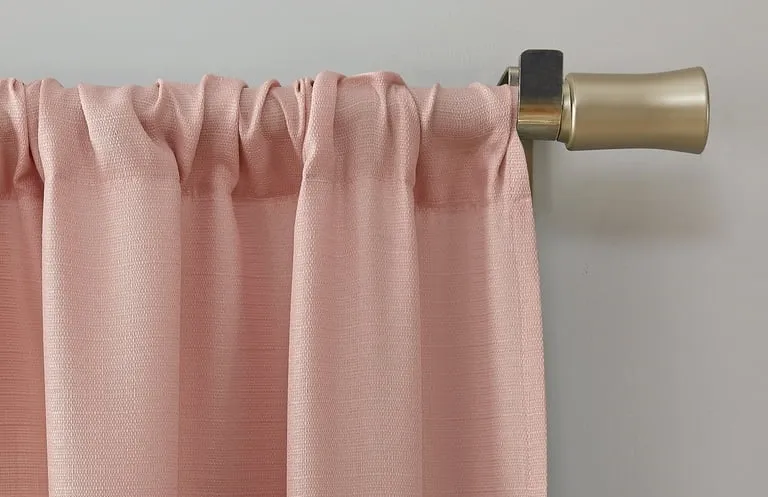
Rod pocket curtains are one of the most popular and straightforward window treatments to fabricate — but accurate fabric calculations still require attention to several variables. The pocket size, ruffle height, fullness, returns, and hem allowances all feed into the final yardage figure. Get any one of them wrong and the finished panel will be too short, too flat, or impossible to thread onto the rod.
This guide walks through every input that goes into a rod pocket calculation so you understand what the numbers mean and why each one matters.
How a Rod Pocket Panel Is Built
A rod pocket panel has four structural elements that affect fabric consumption: the header (which may or may not include a ruffle above the pocket), the rod pocket itself, the finished panel body, and the bottom hem. Together these determine the cut length. Multiplied by the number of widths needed, they determine total yardage.
Because the rod slides directly through the sewn pocket channel, the pocket size must match the rod diameter closely. Unlike traverse drapery, there are no carriers, hooks, or tape — the fabric itself carries all the load, which is why hem weights and construction quality matter.
Rod Pocket Size
The rod pocket size is the inside finished dimension of the pocket channel — the space the rod actually slides through. It should be slightly larger than the rod's diameter so the panel gathers smoothly without binding.
As a general rule, add ¼" to ½" to the rod's outer diameter to get your pocket size. For a 1" round rod, a 1¼" or 1½" pocket is typical. For larger decorative rods (2"–3" diameter), scale the pocket accordingly and check whether the fabric's weight will allow it to slide without excessive friction.
| Rod Diameter | Suggested Pocket Size |
|---|---|
| ⅜" — ½" | ¾" — 1" |
| ¾" — 1" | 1¼" — 1½" |
| 1¼" — 1⅜" | 1¾" — 2" |
| 2" — 2½" | 2½" — 3" |
| 3" | 3½" |
Pocket Turn-Up
The pocket turn-up is the strip of fabric folded behind the rod pocket to form its bottom seam. It keeps the bottom of the pocket clean and prevents the raw edge from fraying out from inside the pocket. A typical turn-up is ½" to 1". This amount is added to the pocket size in the cut length calculation.
For example, a 1½" rod pocket with a ½" turn-up requires 2" of fabric for the pocket itself, not counting the ruffle or the header fold that finishes the top edge.
Header Ruffle Size
When using a Pocket and Ruffle header style, the ruffle is the decorative strip of fabric that stands above the rod once the panel is hung. It is created by allowing extra fabric beyond the top of the pocket to fold forward over the rod.
Ruffle sizes commonly range from 1" to 4". A taller ruffle creates a cottage or romantic look; a shorter ruffle gives a more tailored appearance. The ruffle height is added directly to the cut length.
If you are using a Pocket Only header style, no ruffle fabric is added. The top of the panel is simply finished at the pocket opening.
Fullness
Fullness is the ratio of cut fabric width to finished rod width. A fullness of 2.5× means you are using 2.5 times as much fabric as the rod is wide, which creates the gathered effect that rod pocket curtains are known for.
Common fullness values for rod pocket panels:
- 1.5× – 2×: Light, minimal gather. Works well for sheers and lightweight linens where a softer, less structured look is desired.
- 2× – 2.5×: Standard fullness for most decorative rod pocket panels. Provides good gathering without excessive bulk at the returns.
- 2.5× – 3×: Full, rich gather. Best for heavier fabrics or when a more dramatic window treatment is the goal.
If you prefer to work from a specific number of fabric widths rather than a multiplier, you can enter widths per panel directly. This is useful when you know exactly how many widths a particular fabric will take and want consistent yardage across a project.
Rod Width and Returns
The rod width is the span from where the curtain starts on the left to where it ends on the right. For rod pocket curtains this is usually the face width of the rod bracket-to-bracket measurement — the portion the fabric actually covers.
The return is the distance the rod projects from the wall. On a standard bracket this might be 2" to 4"; on a ceiling-mount or extended bracket it can be considerably more. The return fabric wraps around the end of the rod back to the wall, so it must be accounted for in the finished width calculation.
For a pair of panels, each panel covers half the rod width plus the return on its outside edge. Forgetting the return is one of the most common causes of panels that look correct on the rod but expose the wall at each end.
Side Hems
Rod pocket panels have two side hems: the return side hem (the outer edge that wraps to the wall) and the overlap side hem (the leading edge at the center). Both are typically double-folded, with 1½" for each fold being the standard configuration — giving a 3" finished side hem on each edge.
Side hems are factored into the cut width calculation. The total side hem allowance for both sides is subtracted from the usable fabric before calculating how many widths are required.
Bottom Hems
A double-folded 4" bottom hem (8" of total fabric) is the most common configuration for rod pocket drapery. Heavier fabrics benefit from a deeper hem for added weight and a cleaner hang.
For lined panels, the lining has its own separate bottom hem, and the lining offset lifts the lining bottom slightly above the face fabric hem so it remains invisible from the front. A typical lining offset is 1" to 1½". If you are using interlining as well, the interlining offset is set slightly higher than the lining offset — typically 2" to 2½".
Vertical Repeat
If your fabric has a printed or woven pattern, you need to add the vertical repeat to each cut length so the motif aligns across widths. Each panel width after the first must be cut at an interval that places the repeat at the same position as the previous width before the seam is sewn.
Enter zero for solid fabrics, textures with no repeat, and most stripes. For patterned fabric, check the label or ask the supplier for the official repeat measurement.
Putting It All Together: The Cut Length Formula
For a rod pocket panel with a ruffle, the cut length formula is:
Cut Length = Finished Length + Ruffle + Pocket + Turn-Up + Bottom Hem + Cut Allowance
For a pocket-only panel (no ruffle):
Cut Length = Finished Length + Pocket + Turn-Up + Bottom Hem + Cut Allowance
If the fabric has a vertical repeat, round the cut length up to the next full repeat interval before multiplying by the number of widths.
Example
- Finished length: 84"
- Header ruffle: 2"
- Rod pocket size: 1½"
- Pocket turn-up: ½"
- Bottom hem: 8" (double 4")
- Cut allowance: ½"
- Vertical repeat: 13.5"
Base cut length = 84 + 2 + 1.5 + 0.5 + 8 + 0.5 = 96.5"
Rounded up to next full repeat: 96.5 ÷ 13.5 = 7.15 → round up to 8 repeats × 13.5" = 108" cut length
Using the EZ Pleating Rod Pocket Calculator
Every measurement described above is an input in the EZ Pleating Rod Pocket Calculator. Once you enter your rod width, finished length, pocket size, turn-up, ruffle height, fullness, hem values, and lining settings, the calculator handles all of the cut length arithmetic, width calculations, and yardage totals automatically — including the repeat rounding logic that is easy to get wrong when working by hand.
The output includes separate yardage figures for face fabric, lining, and interlining, along with cut lengths and cut widths for each material. For multi-window projects you can specify the number of identical windows and receive a consolidated yardage total in a single calculation.
If you are new to the calculator, the EZ Pleating Glossary has a plain-language definition for every field so you always know exactly what to enter.
Summary
Accurate rod pocket calculations come down to getting six things right: pocket size, pocket turn-up, ruffle height, fullness, returns, and hem allowances. Leave any one of them out and your yardage will be off. With a clear understanding of each input — and a reliable calculator doing the math — you can produce consistent, professional rod pocket panels every time.
