Railroaded Fabric: When to Use It and How It Changes Your Yardage
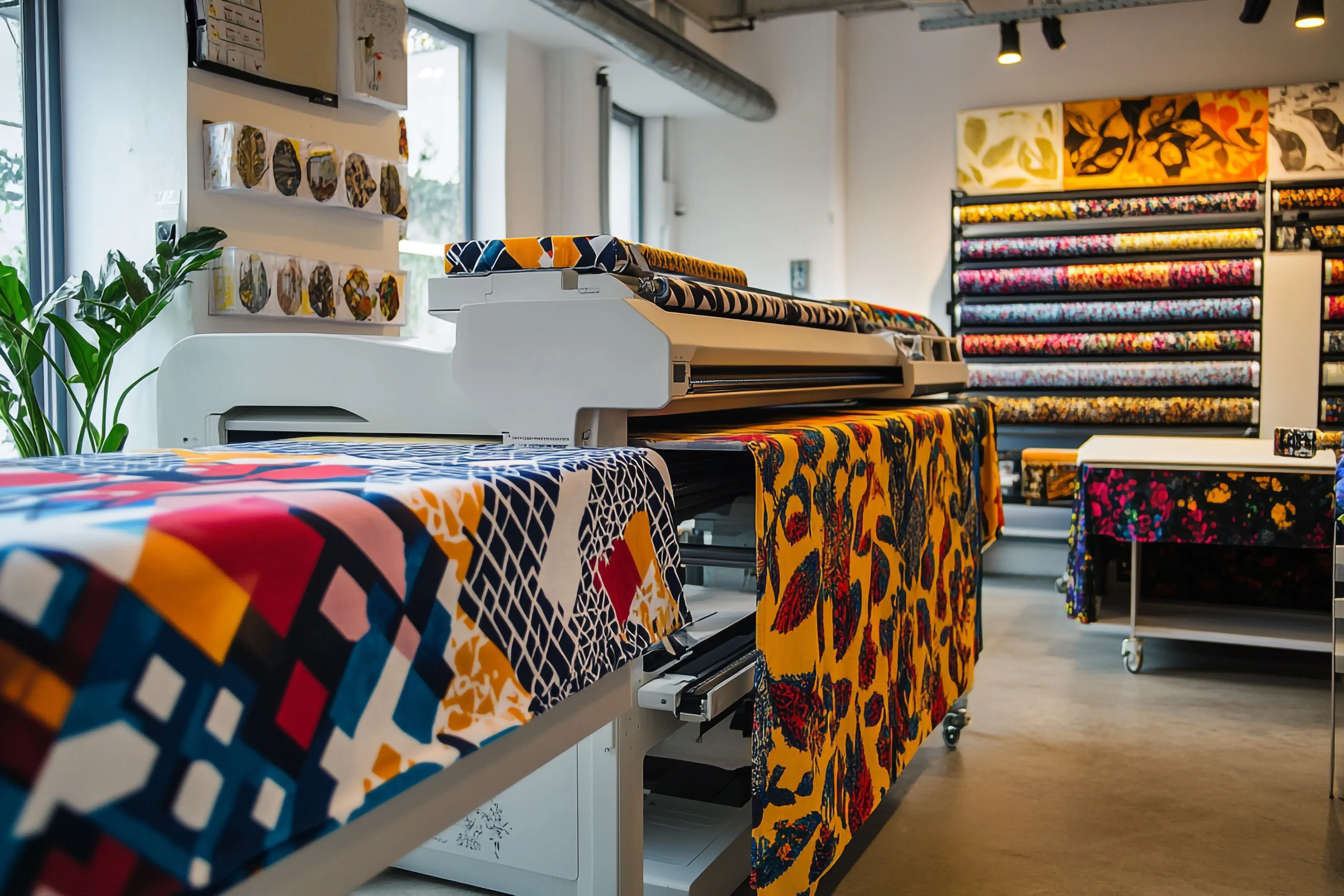
Most drapery is cut the way you would expect. The fabric runs off the bolt vertically, each cut becomes the height of the panel, and you join enough of those cuts side by side to reach the width you need. Railroading turns that ninety degrees. The fabric runs sideways, so the width of the goods becomes the length of the panel, and a single continuous piece can span the whole treatment with no vertical seams at all.
It is one of the few decisions in a drapery job that changes almost every number downstream: how many widths you need, how much yardage you buy, how many seams you sew, and what the job costs. It is also the decision people are most likely to get wrong in both directions, either railroading something that should not be railroaded, or seaming a panel that could have been seamless.
What Railroading Actually Does
Think about a 118" wide bolt of seamless drapery fabric. Cut conventionally, that 118" is the width of one panel section and the length comes off the roll. Railroaded, that 118" becomes the length available to you, and you pull as much off the roll as you need to reach your finished width.
The consequence is the part that surprises people. On a railroaded panel, the yardage you buy is driven by the width of the finished panel, not its length. A very long, narrow treatment railroads cheaply. A short, very wide one does not.
Because a single piece spans the whole panel, railroading also means one width per panel and no seams. For many workrooms that is the entire reason to do it. A seamless sheer across a wide window looks materially better than the same sheer with three seams marching across it, and no amount of careful sewing hides a seam in a plain light-coloured fabric with sun behind it.
The One Limit That Rules It Out
There is a hard constraint, and it is not negotiable:
You cannot railroad a panel when the cut length exceeds the fabric width.
Cut length here means the finished length plus everything you add to it: the header allowance, the bottom hem, and your cut allowance. That whole figure has to fit inside the width of the goods, because the width of the goods is what is becoming the length of your panel.
A worked case. A 96" finished length with a 4" header turn, an 8" doubled bottom hem and a 4" cut allowance needs 112". On 118" goods that railroads with six inches to spare. On 110" goods it does not railroad at all, and no clever cutting changes that.
This is why railroading is mostly a conversation about wide goods. Standard 54" drapery fabric can only be railroaded on genuinely short treatments such as café curtains, a short cascade, or a valance. That is exactly why you see railroading discussed so often alongside seamless sheers, which are milled wide precisely so they can be used this way.
How the Yardage Math Changes
Conventionally, you divide the total width you need by the fabric width to get your number of widths, round up, and multiply that by the cut length:
widths × cut length ÷ 36 = yards
Railroaded, the widths drop out entirely. There is one continuous piece, so the panel width itself is what you pull off the roll:
total panel width ÷ 36 = yards
Put real numbers against both. Take a pair covering a 100" rod at 2.5× fullness, which with returns, overlaps and side hems comes to about 270" of fabric width, at a 96" finished length and a 112" cut length.
- Conventional, on 54" goods. 270 ÷ 54 = 5 widths. Five cuts at 112" is 560", or about 15.5 yards, plus four seams to sew.
- Railroaded, on 118" goods. 270" straight off the roll is 7.5 yards, and no seams.
Half the yardage and none of the seaming. That comparison is what sells people on railroading, but read the next section before you take it at face value.
Fewer Yards Does Not Always Mean Cheaper
The yardage comparison above is real, but it is not a price comparison, and treating it as one is a good way to quote a job badly.
Wide seamless goods cost more per yard than 54" goods, often substantially more. Buying 7.5 yards of a wide seamless at one price and 15.5 yards of a standard fabric at another can land anywhere. Sometimes railroading saves real money. Sometimes the material cost is a wash and what you are actually buying is the seamless appearance and the labor you did not spend on four seams.
Both are good reasons to railroad. Neither is automatically cheaper, and the only way to know for a given job is to price it both ways with the actual fabric prices in front of you.
Labor moves too. Most workrooms price drapery labor per width, so a job that collapses from five widths to one width does not simply become one-fifth of the labor. A railroaded panel is still a full-size panel to handle, press, hem and finish. If you price per width, decide deliberately how a railroaded panel is billed rather than letting the width count decide it for you. Our guide to pricing custom drapery covers how the per-width rate and billing widths work together.
When Not to Railroad
The fabric has to agree with the plan. Several things rule it out even when the cut length fits comfortably inside the width of the goods.
- Directional patterns. Turn the fabric ninety degrees and the pattern turns with it. Vertical stripes become horizontal stripes. A florals-growing-upward print grows sideways. If the design has an obvious up, railroading will show it.
- Nap and sheen. Velvets, some sateens and many textured weaves reflect light differently along the length than across it. Railroaded, that shift reads as a colour change, and it will be most obvious exactly where the client stands.
- Pattern repeats. Railroading does not remove repeat matching, it rotates the problem. The vertical repeat you would normally allow for between widths becomes a horizontal consideration along the panel. See understanding pattern repeats for how repeats consume fabric.
- Drape and hand. Fabrics are engineered to hang along the warp. Turned sideways, some fall differently, a little stiffer and a little less fluid. On a heavy fabric with deep pleats this is worth a sample before you commit a whole job to it.
- Weighted or finished edges. If the goods have a finished bottom edge or a border intended to sit at the hem, railroading puts it somewhere you did not intend.
A Quick Checklist
Before you commit a job to railroaded fabric, confirm all five:
- Cut length, meaning finished length plus header, hem and cut allowance, is less than the fabric width.
- The pattern has no direction, or the client has approved it running sideways.
- The fabric has no nap or sheen that shifts when it is turned.
- You have priced the job both ways with real fabric prices, not just compared yardage.
- You know how your per-width labor rate applies to a single-width railroaded panel.
Every EZ Pleating calculator has a railroaded option, and switching it changes the widths, the yardage and the estimate together, so you can price a job both ways in a few seconds and make the call on numbers instead of instinct.
