How to Choose Drapery Hardware for Pleated Drapes
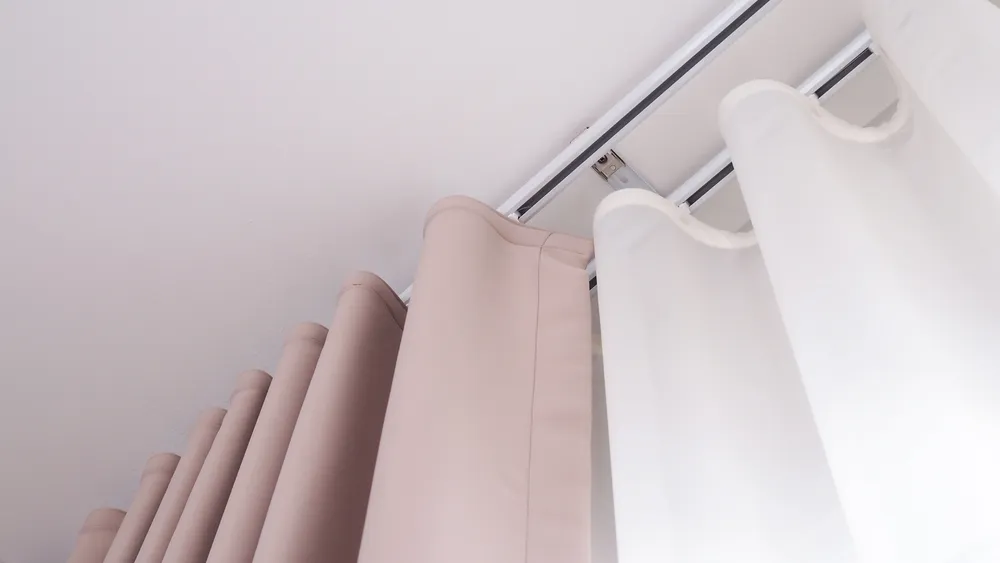
The right drapery hardware is just as important as the fabric and pleat style. Choosing the wrong rod, track, or hook can compromise the hang, operation, and overall appearance of your pleated drapes. This guide walks through the key hardware categories and how to match them with your specific pleat type for professional, lasting results.
Decorative Rods vs. Drapery Tracks
The first decision in any pleated drapery project is whether to use a decorative rod or a concealed track. Each serves different aesthetic and functional purposes.
Decorative Rods
Decorative rods are visible and designed to be part of the room's design. They work well with drapery rings and are best suited for pinch pleat, goblet pleat, and euro pleat styles where the top of the curtain hangs below the rod.
- Available in wood, metal, and acrylic finishes
- Require rings or clips for panel attachment
- Best for residential and boutique commercial settings
- Typical diameters range from 1" to 1-3/8"
Drapery Tracks
Tracks are mounted at or above ceiling level and concealed behind the drapery heading. They are the preferred choice for traverse systems, ripplefold, and motorized installations. Tracks offer smoother operation and are ideal for heavy or long panels.
- Can be ceiling-mounted or wall-mounted with brackets
- Support heavier fabric weights than most rods
- Required for ripplefold and many contract applications
- Available in bendable profiles for bay and curved windows
Drapery Hooks and Pin Types
Hooks and pins are the connection point between the pleated heading and the hardware. Choosing the correct type ensures the drape hangs at the right height and operates smoothly.
Pin-On Hooks
Standard sharp-point hooks that pierce through the pleat backing. Available in different lengths to control the "drop" — the distance from the top of the hook to the top of the fabric. Pin-on hooks are the most common choice for pinch pleat and euro pleat drapes on traverse rods.
Slip-In Hooks
Designed for pleating tape or buckram pockets, slip-in hooks slide into pre-sewn channels without piercing the fabric. They allow easy adjustment and removal, making them popular in hospitality and commercial laundry environments.
Drapery Rings
Rings slide over a decorative rod and attach to the pleat via a small eyelet or clip. Ring size must match the rod diameter with enough clearance for smooth traversal. Rings work well with pinch pleats, goblet pleats, and inverted pleats.
Matching Hardware to Your Pleat Style
Not all hardware works with every pleat type. Selecting the wrong combination can cause stacking issues, uneven folds, or operational problems. Here is a quick reference:
| Pleat Style | Recommended Hardware | Attachment Method |
|---|---|---|
| Pinch Pleat | Decorative rod with rings or traverse track | Pin-on hooks or rings |
| Euro Pleat | Decorative rod with rings or ceiling track | Pin-on hooks or rings |
| Goblet Pleat | Decorative rod with rings (stationary panels) | Rings with eyelets |
| Box Pleat | Traverse track or decorative rod | Pin-on hooks or slip-in hooks |
| Ripplefold | Ripplefold track system only | Snap tape to carriers |
| Pencil Pleat | Track or rod with gliders | Slip-in hooks into header tape |
Bracket Projection and Returns
Bracket projection, how far the rod or track extends from the wall, directly affects how your pleated drapes sit and stack. If the projection is too shallow, the fabric will press against the wall or window trim. If it's too deep, the panel may gap or look disconnected from the wall.
- Standard projection: 3.5" to 4.5" from the wall for single-layer treatments
- Double treatments: 6" to 8" to accommodate sheers behind the main drape
- Returns: The fabric must wrap from the last pleat back to the wall. Always account for return depth in your calculations.
EZ Pleating automatically factors return and overlap into every pleated panel calculation, ensuring your hardware and fabric specifications match perfectly.
Weight Capacity and Fabric Considerations
Hardware must support the total weight of the finished panel: fabric, lining, interlining, and any additional trim. Undersized rods or brackets can bow, sag, or fail entirely.
- Check the manufacturer's weight rating per linear foot for rods and tracks
- Use center support brackets for spans exceeding 48" on decorative rods
- Heavy fabrics like velvet or triple-lined drapes may require commercial-grade track systems
- Motorized tracks have specific load limits — always verify before specifying
Common Hardware Selection Mistakes
- Choosing decorative rings that are too tight for the rod, causing friction and difficult operation
- Using pin-on hooks with the wrong drop length, placing the heading too high or too low
- Ignoring bracket projection, causing panels to rub against window frames or blinds behind them
- Specifying a decorative rod for a ripplefold system, which requires a dedicated track
- Failing to account for return and overlap in the hardware width, resulting in panels that don't close fully
Summary
Drapery hardware is not an afterthought , it's a foundational part of every pleated drapery specification. Matching the correct rod, track, hook, and bracket to your pleat style and fabric weight ensures clean operation, proper hang, and a polished, professional result.
EZ Pleating takes the complexity out of hardware coordination by factoring return, overlap, projection, and pleat type into every calculation, giving workrooms and designers confidence in every specification.
